Second-Story Additions in Fairfield County, Litchfield County & Northern Westchester

We design and build second-story additions that double a house in place — so you keep the lot, the neighborhood, and the schools.

A second-story addition is the answer when the house has hit its ceiling but the location is exactly where you want to stay. A ranch or a small cape that's run out of bedrooms. A growing family that needs a real primary suite. A great lot in a great town that you're not willing to give up to the current market.

The first question is always structural: can the house carry a second floor? We answer that early, before anyone falls in love with a plan. From Fairfield, Trumbull, and Norwalk to Ridgefield, Washington, Bedford, and Somers, we help homeowners across Fairfield County, Litchfield County, and Northern Westchester build up instead of moving out.

Ground-Floor Additions That Work

Have Questions?

When the Floor Plan No Longer Fits the Family

Most clients come to us with the same situation. They love where they live and they've outgrown the house.

The trigger is usually the math on moving: facing today's prices and tight inventory, building up to stay can beat trading everything you like about where you live for a bigger house somewhere you like less.

Can Your House Carry a Second Floor?

This is the universal question, and it's the right one to ask first. We answer it before any design work begins.

A second-story addition puts significant new weight on the existing structure. Whether the house can carry it comes down to the foundation, the walls below, and the framing. We bring in a structural engineer early to evaluate exactly that:

Sometimes the answer is that the house carries a second story with straightforward reinforcement. Sometimes the structure needs more work to get there. Occasionally the most sensible path is to take the existing structure down to the foundation or the first floor and rebuild up from there — which sounds dramatic but is sometimes the cleaner, more cost-effective route to the house you want.

What matters is that you know the answer before you commit. We don't design a second story and hope the house can take it. We confirm it can, and we tell you what that takes, at the start.

A Brief History of the Second-Story Addition

Building up is older than the suburb that made building out the default.

In dense towns and cities, adding a floor was always how a house grew — there was nowhere else to go. It was the postwar suburb, with its cheap land and wide lots, that made the single-story ranch and the story-and-a-half cape the standard. Builders put up tens of thousands of them across the Northeast in the 1950s and 1960s, sized for the families and the expectations of that moment.

Those houses are now two and three generations old, on land that has only become more valuable. The families living in them have different expectations — more bedrooms, real primary suites, more space — and far less appetite for tearing down a sound house on a good lot. So the second story has come back as the obvious move: take a well-built postwar ranch in a town you'd never want to leave, and give it the upstairs it never had.

The homes we work on are well suited to it. Many postwar ranches and capes were solidly built, with the bones to carry a second floor once the structure is properly evaluated and reinforced.

Fairfield County is where the build-up-or-move calculation is sharpest.

Property values are high and inventory is tight. Moving up usually means paying a premium for a bigger house — and often giving up the exact things that made you choose your street in the first place: the lot, the neighborhood, the schools, the commute. Against that, adding a second story to a house you already own and like starts to look like the better deal.

The post-war ranches and capes in towns like Fairfield, Trumbull, and Norwalk are the classic candidates. Solid single-story houses on good lots, sized for a different era, sitting in towns people work hard to get into. Building up keeps everything that's right about the location and fixes the one thing that isn't.

There's a zoning angle too. A second story adds space without adding footprint, which often sidesteps the lot coverage limits that would constrain a ground-floor addition on a tight lot. The constraint that does apply is height — and we plan the new floor around each town's height limit from the start.

Property Management & Estate Caretaking Services

Second-Story Additions in Northern Westchester

kitchen and bathroom remodeling

The same logic drives second stories across the state line in Northern Westchester — Bedford, Lewisboro, Somers, Pound Ridge, North Salem, Katonah, and Cross River.

These are towns where families come for the land, the schools, and the setting, and where ranch and cape owners face the same choice: pay up to move, or build up to stay. For a house on a lot worth keeping, building up almost always keeps more of what matters.

The wrinkle here is the same one that shapes every project in these towns. Because a second story adds height rather than footprint, it usually clears the wetland and steep-slope issues that constrain a ground-floor addition — the build is going up, not out into a buffer. Height limits and the look of the finished house carry more weight than coverage does. We plan the addition around each town's height rules and design it to sit on the existing house as if it belongs there.

Second-Story Additions in Litchfield County

In Litchfield County, the land usually gives owners the choice to build out — but the second story still earns its place.

On the smaller ranches and capes in Washington, Kent, New Milford, Roxbury, Sharon, Litchfield, and Woodbury, building up can be the cleaner answer than spreading the footprint across the lot, especially where septic fields, wells, and wetlands limit where a ground-floor addition could go. Going up sidesteps all of that.

The consideration out here is the public face of the house. In towns with historic district commissions, a second story changes the home's profile and roofline in a way a rear addition doesn't — and that's exactly what those commissions weigh. A second story has to be designed to look original to the house and right for the street. We've worked in front of these boards, and we design the new floor to read as if it was always part of the home.

Kitchen Remodeling
Will You Have to Move Out — and How Long Does It Take?

These two questions usually come together, and they're fair to ask up front.

Moving out.

A second-story addition is the one addition where the honest answer is often yes, at least for part of it. Adding a full floor means opening the roof, and there's a stretch — typically when the existing roof comes off and the new floor goes on and gets weathered in — when the house isn't a place to live. Many families plan to be out for that phase. How long depends on the scope and the weather, and we're straight with you about it during planning rather than mid-project.

Timeline.

A second story is a major project, longer than a ground-floor addition. Permitting and design come first, then the build. We give you a real schedule once the structural plan and the design are set, including a realistic window for the phase you'd need to be out, so you can plan around it.

The point of being clear about this early is simple: the move-out question is part of the build-up-or-move decision, and you should weigh it with real information, not a guess.

Build Up or Move?

This is the decision most of our second-story clients are actually making, so it's worth naming.

Against moving, a second story keeps everything you'd otherwise pay to replace — the lot, the neighborhood, the schools, the commute, the part of the house that already works — and adds the space you're missing. In a market with high prices and tight inventory, the cost of buying up, plus the transaction costs of selling and moving, often makes building up the better financial decision, not just the more comfortable one.

It isn't always. Sometimes the structure, the budget, or the timeline points the other way, and we'll tell you if it does. But for a sound house on a lot worth keeping, building up is frequently the move that makes the most sense — and we'll help you run the comparison honestly before you decide.

Will the Second Story Look Original?

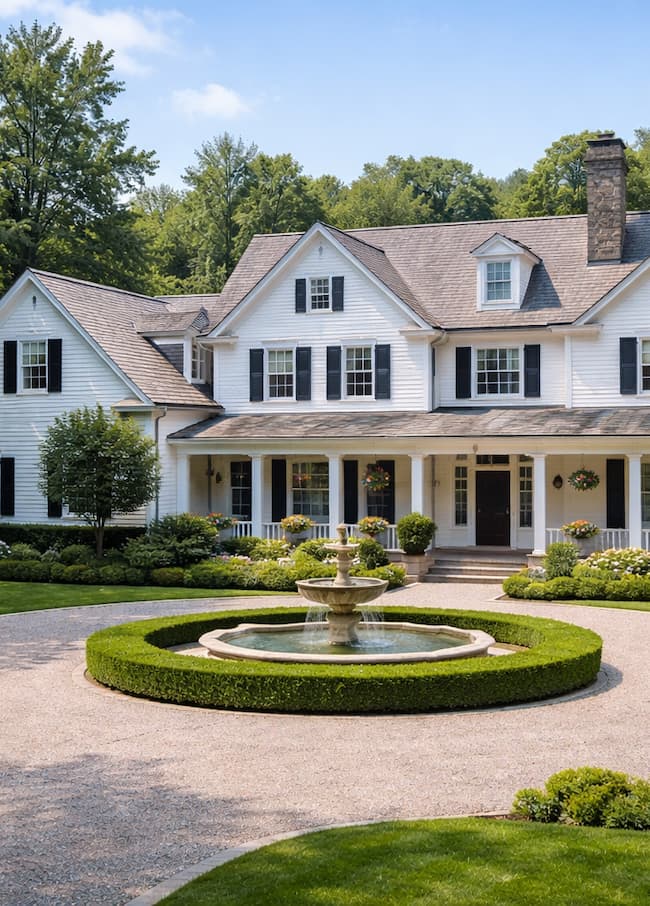
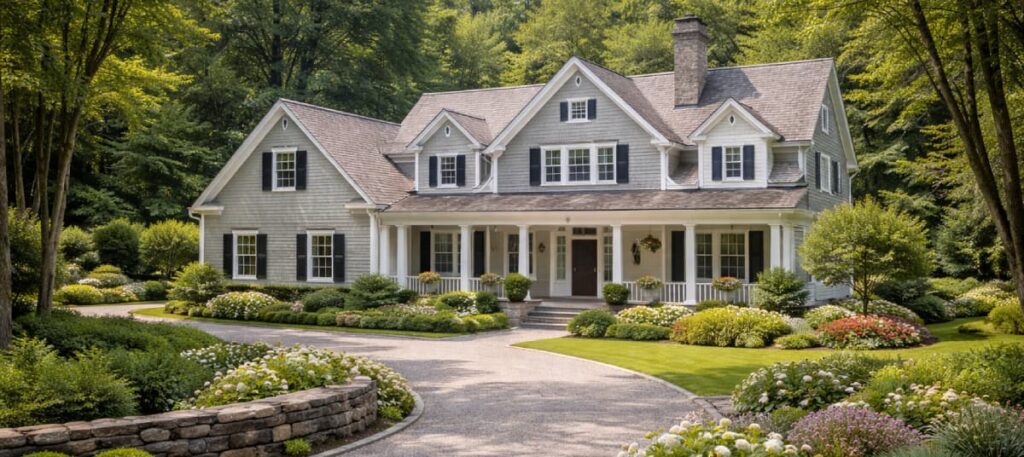
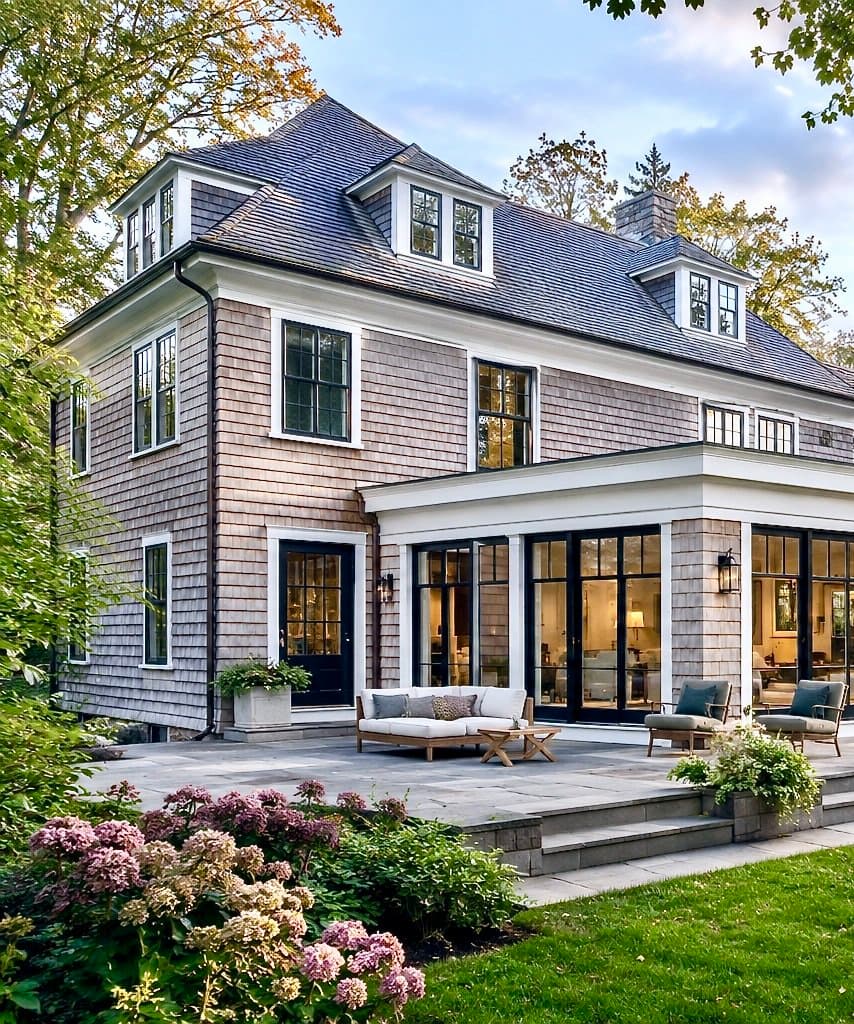
That's the standard. A second-story addition shouldn't look like a second story bolted onto a ranch. It should look like the house was always two stories.

That comes down to proportion and detail. Rooflines, window placement and proportion, siding, and trim all have to read as one coherent house, not a base and a hat. Getting a ranch-to-colonial conversion right is as much about design as construction — the new floor has to relate to the first floor the way it would have if the house had been built that way from the start.

It's one of the things that separates a good second-story addition from an obvious one, and it's a large part of what we focus on in design.

Kitchen Remodeling In Old Greenwich CT

A Community-Driven Approach to Second-Story Additions

Dormers The Most Efficient Move

Rowe Construction is based here. Our founder, Connor Rowe, grew up in Ridgefield. The company was built to serve homeowners across Fairfield County, Litchfield County, and Northern Westchester.

For a project this size, local context matters at every stage. We know the post-war ranch and cape stock in Fairfield, Trumbull, Norwalk, Bedford, and Somers, and how those houses are built. We know how each town reads its height limits. We know how the historic commissions in Washington and Litchfield weigh a change to a home's profile. And we bring the structural evaluation in early, so the answer to "can the house carry it" comes before the design, not after.

Seasonal Maintenance for Northern Westchester Homes

Clients value:

Direct communication. You know where things stand. A focused workload. We take on a limited number of projects. Full-service coordination. Structural evaluation, planning, permitting, and construction handled as one process.

Permitting, Zoning, and Setbacks for Second-Story Additions A second story adds height rather than footprint, which changes which rules govern the project.

Because the addition goes up rather than out, lot coverage is usually less of a constraint than it is for a ground-floor addition — which is part of why building up works on tight Fairfield County and Northern Westchester lots. The rule that does govern is building height, and every town sets its own limit. Where a home's profile changes in a historic district, that review applies too. Setbacks still matter where the existing house already sits close to a line.

We map all of this before drawings start, and we handle the coordination with local building departments, zoning boards, and where required, historic commissions — along with the structural engineer and architect whose work the town needs to see. The goal is to move the project forward without delays or surprises. Request A Free Quote [Get A Quote]

Thinking About a Second-Story Addition? ![Second-Story Addition Litchfield CT] Image alt text: Completed second-story addition Litchfield County CT

Most people don't start with a full plan. They start with a house they've outgrown and a location they don't want to leave.
FAQs

FAQs Frequently Asked Questions About Second-Story Additions

  • Can my house structurally support a second story?

    That's the first thing we evaluate, before any design work. A structural engineer assesses the foundation, the bearing walls, and the existing framing to determine whether the house can carry a second floor and what reinforcement it needs. Sometimes it's straightforward; sometimes the structure needs more work; occasionally the cleanest path is rebuilding up from the first floor or foundation. You'll know the answer before you commit.

  • Will I have to move out during construction?

    Often, for part of it. Adding a full floor means opening the roof, and there's a stretch — when the existing roof comes off and the new floor is built and weathered in — when the house isn't livable. Many families plan to be out for that phase. We give you a realistic window for it during planning.

  • How long does a second-story addition take?

    It's a major project, longer than a ground-floor addition. Permitting and design come first, then the build. We provide a real schedule once the structural plan and design are set, including the window you'd need to be out.

  • Does building up cost less than moving?

    Often, yes. A second story keeps the lot, neighborhood, schools, and commute you'd otherwise pay to replace, and in a market with high prices and tight inventory, building up plus avoiding transaction costs frequently beats buying a larger house elsewhere. It isn't always the right call, and we'll help you run the comparison honestly before you decide.

  • Will the second story look like it was always there?

    That's the standard. Rooflines, window proportions, siding, and trim all have to read as one coherent house rather than a floor added on top. Getting a ranch-to-colonial conversion right is as much design as construction, and it's a major focus of ours.

  • Does a second-story addition avoid lot coverage limits?

    Usually, because it adds height instead of footprint. That's part of why building up works well on tight lots in Fairfield County and Northern Westchester. The rule that does govern is building height, which every town limits, and historic district review where a home's profile changes.

  • Do I need a permit for a second-story addition?

    Yes. Second-story additions require building permits in every town we work in across Fairfield County, Litchfield County, and Northern Westchester, along with zoning review for height and, where applicable, historic district approval. We handle that process.

That's enough.

We start where it matters most — with a structural evaluation of whether the house can carry a second floor, and what that would take. Then we look at the design, the town's height rules, the move-out question, and how the numbers compare to moving. Sometimes the answer is a full second story. Sometimes the structure points toward rebuilding up from the first floor. Sometimes the right move is a different addition entirely. We'll tell you that too.