
The Case for Building Out: Ground-Floor Additions That Work
When the rooms you love most can no longer hold the life you’re living, the answer is rarely to move — it is to build with intention.
There is a particular domestic frustration that is nearly universal among families who settled into Connecticut’s older housing stock during the 1980s and ‘90s: the rooms were designed for a different era’s idea of privacy. Kitchens were compartments. Family rooms were afterthoughts tucked behind formal dining rooms that no one actually used. The house, in other words, was built for an earlier generation’s rituals — and it shows every time you host a dinner, supervise homework, or simply try to move through a Saturday morning without navigating a series of narrow doorways.
The impulse to move is understandable. The desire to stay and to finally build what you actually need is wiser. Ground-floor additions, lateral expansions of kitchens, family rooms, and living spaces, represent one of the most considered investments a homeowner can make. They do not merely add square footage; done correctly, they rewrite the logic of a home.
When the Floor Plan No Longer Fits the Family
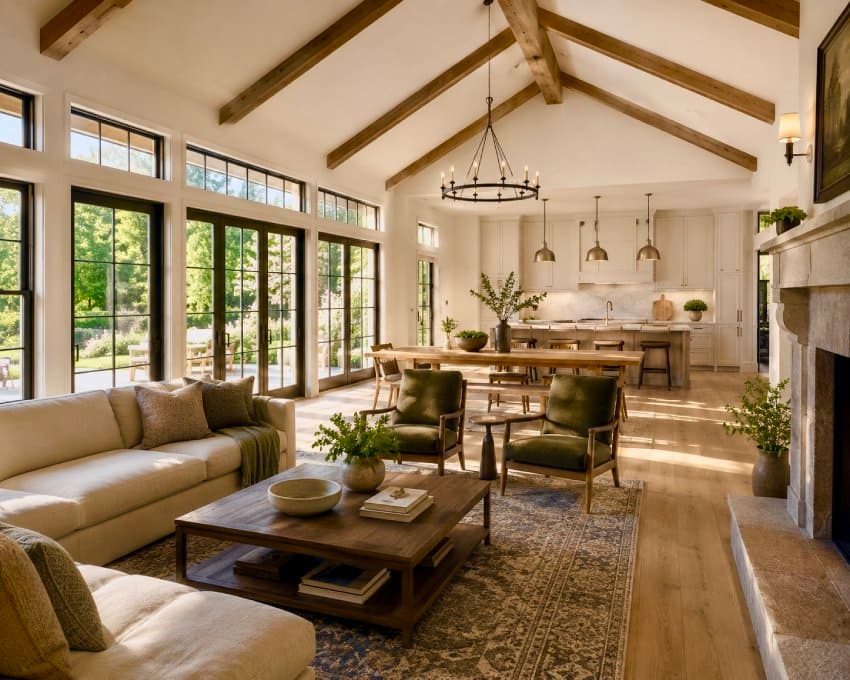
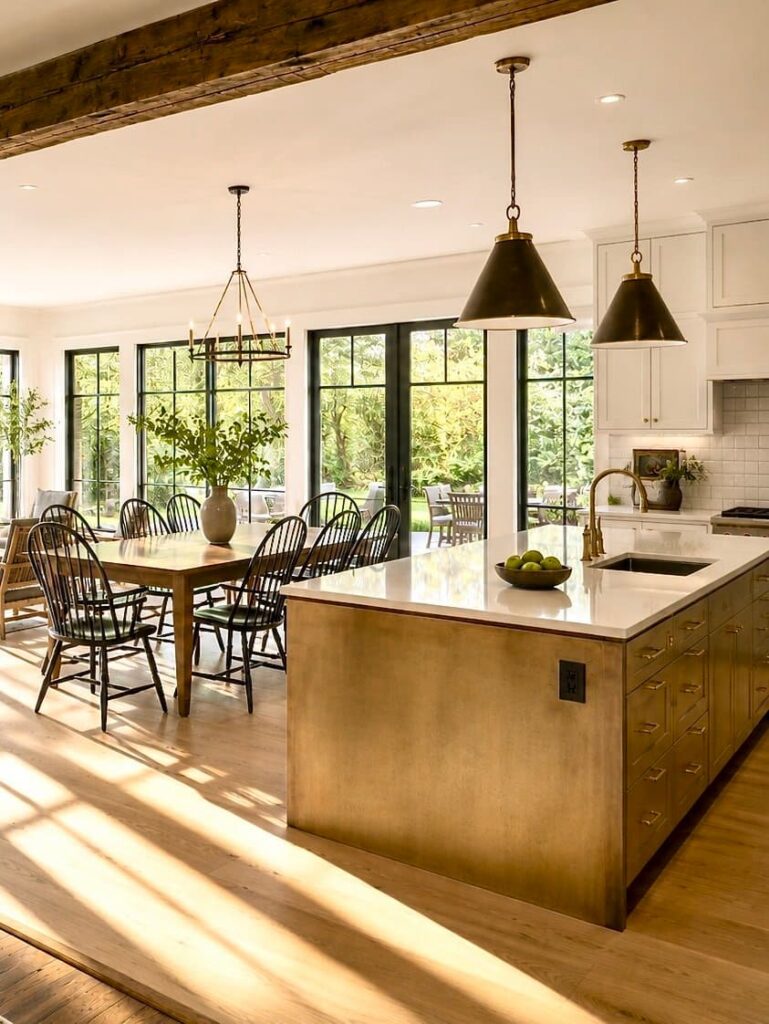
The trigger is almost always the same: a kitchen that functions as an island rather than a gathering place, a family room sealed off from the yard, a growing family that has quietly outgrown the geometry of 1980s residential design. What homeowners want is not simply more space; it is a true great room. A single, generous, intelligently proportioned space where cooking, conversation, and daily life can unfold simultaneously and without obstruction.
The great room concept, broadly popularized in American residential architecture during the late twentieth century, has become the organizing ideal for modern family living precisely because it reflects how people actually inhabit their homes. It dissolves the rigid formality of compartmentalized floor plans, replacing it with fluid, light-filled space. When families describe wanting “better indoor-outdoor flow,” they are describing this same ideal — a home that does not resist its occupants but moves with them.
A ground-floor addition is often the most direct path to that result. Rather than the structural complexity and displacement of a second-story addition, a lateral expansion works with gravity, with the existing foundation’s logic, and with the natural relationship between interior space and exterior landscape.
“The goal is never to add a room. It is to change what the home is capable of.”
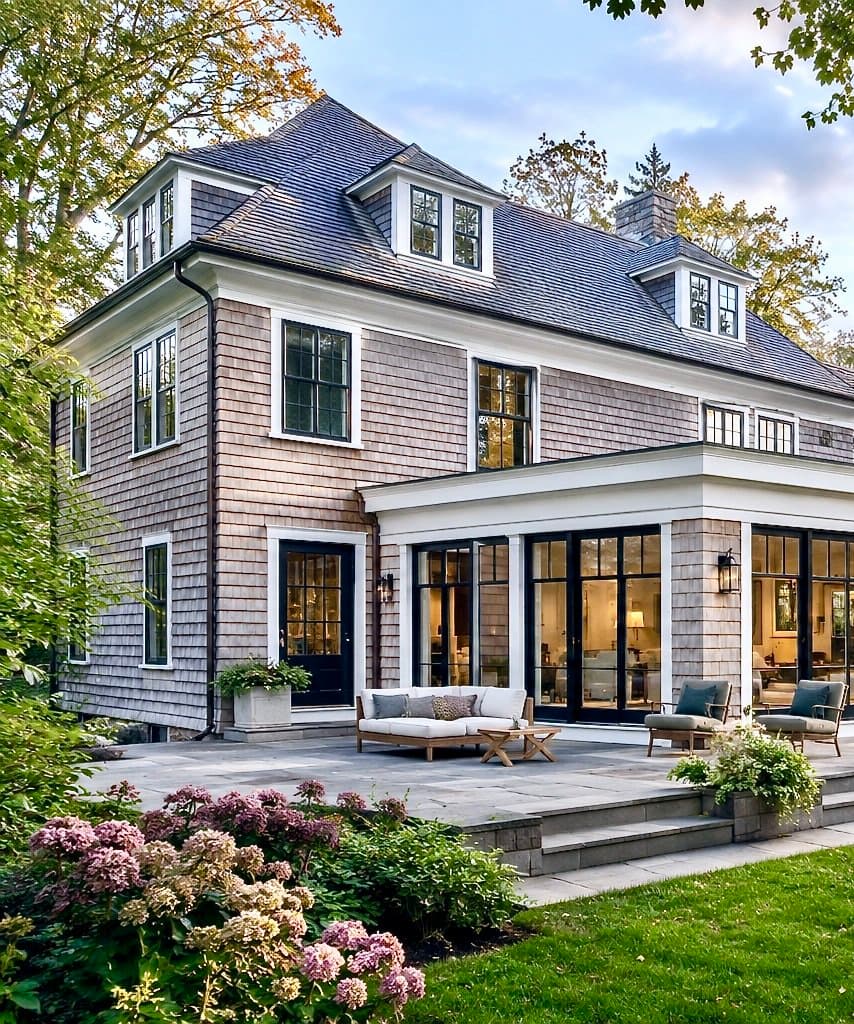
Among the first and most legitimate concerns a homeowner raises is the question of architectural coherence: will the addition feel grafted on, or will it feel original? This is not a superficial vanity. The visual and structural continuity between old and new construction is a genuine test of a builder’s skill, and it has real consequences for how the home reads from the street, how it photographs, and ultimately how it is valued.
The principle is proportion, not imitation. A ground-floor addition need not copy the original home’s details slavishly; it must, however, respect its scale, its roofline logic, and its material vocabulary. Where the original house carries clapboard siding in a particular width and profile, the addition should match, or consciously, elegantly, depart. Where windows are divided-light double-hung, the addition’s glazing should carry forward that rhythm, even in a more contemporary form. The transition zone, the point where the old wall plane meets the new, deserves particular attention: a skilled builder handles this junction not as a seam to hide but as an opportunity to create a detail that rewards a second look.
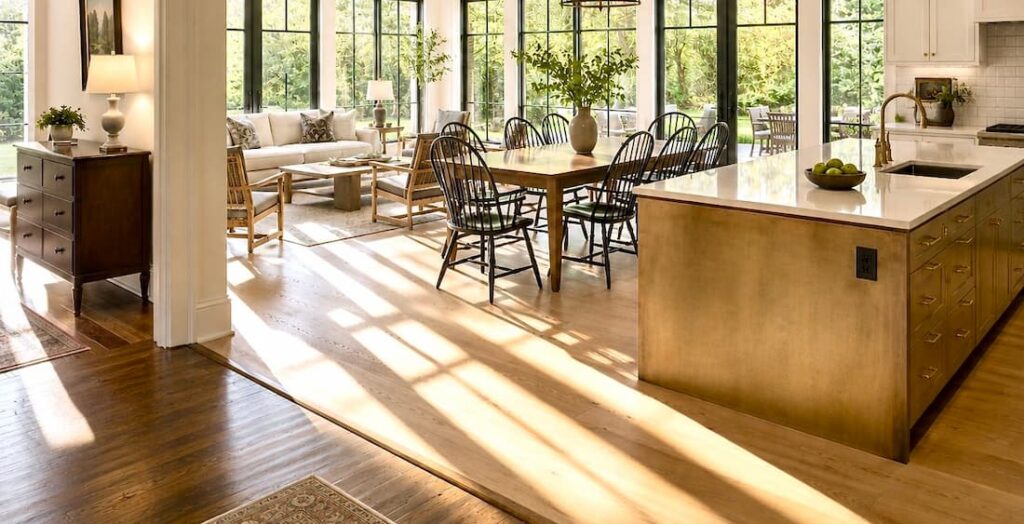
Interior transitions are equally important. The threshold between the existing structure and the new addition should feel like a natural passage, not a corridor between two different houses. Ceiling heights, flooring materials, and the profile of base moldings, these elements carry meaning, and their continuity or deliberate evolution communicates whether the project was built with craft or merely constructed.
Ground-floor additions require honest preparation for the realities of foundation work. Unlike a room added above an existing footprint, a lateral expansion involves new excavation, new footings, and new foundation walls, a process that will temporarily alter the character of your property. Homeowners should expect a period of disruption: equipment access corridors, disturbed lawn and plantings, and the visible evidence of excavation along the addition’s perimeter.
The scope of this work depends considerably on the addition’s size and the existing site conditions. A modest kitchen expansion of three to four hundred square feet may require relatively shallow footings and minimal earth disturbance. A larger family room addition incorporating a new terrace connection might demand more extensive grading. In either case, a responsible builder completes a thorough pre-construction assessment of existing utilities, water, sewer, gas, and electrical, to ensure that nothing is compromised during excavation.
The yard, when the work is complete, will require some degree of landscape restoration. This is not an afterthought; it is an integral part of the project’s success. The relationship between a ground-floor addition and the landscape it opens onto is precisely what makes the investment worthwhile. A new terrace, a rebuilt garden bed, and a carefully graded lawn transition complete the project and fulfill the promise of true indoor-outdoor living.
Geography and local regulation are not obstacles to good design; they are the conditions within which good design is defined. Connecticut’s residential landscape presents distinct constraints depending on where a property sits.
The Spatial Advantage, and Its Hidden Limits
Litchfield County’s larger lots, particularly in Kent, Washington, and the Litchfield Hills, offer genuine spatial latitude for ground-floor expansion. In many cases, there is simply more room to build outward. But the county’s rural character introduces a different set of constraints that can be equally consequential: the locations of septic systems, leach fields, and drilled wells, as well as the delineated boundaries of wetland areas, all govern where an addition’s footprint can and cannot go. Antique-home owners in these towns face the additional challenge of sourcing period-appropriate materials, hand-split shingles, wide-board flooring, and mortise-and-tenon framing details that meet both historical standards and contemporary performance expectations. This is work that requires a builder who understands authenticity as a discipline rather than a decorative gesture.
Setbacks, Coverage, and the Art of the Possible
In Ridgefield, Wilton, New Canaan, and Westport, the primary regulatory framework governing ground-floor additions is the interplay between lot coverage maximums and required setbacks. Every municipality sets a ceiling on the percentage of a lot that may be covered by a structure, and most require that additions maintain prescribed distances from the side and rear property lines. In towns where original structures already occupy a meaningful portion of the allowable coverage, a ground-floor addition requires careful calculation, and sometimes a variance application, before the first shovel breaks ground. Wetlands and steep-slope regulations in towns bordering the Pound Ridge, Bedford, and Litchfield Hills terrain add further design discipline, occasionally redirecting an addition’s footprint or requiring special engineering attention to drainage and erosion.
Planning, Permitting, and Why It Pays to Know the Territory
Every ground-floor addition in Connecticut requires a building permit, and most trigger a zoning review. Projects near wetlands require coordination with local inland wetlands commissions. In towns with designated historic districts, such as several of Rowe’s service communities, additional review may apply to exterior materials and massing. These are not bureaucratic inconveniences; they are the mechanisms by which communities preserve what makes them worth living in. A builder who knows the local approval landscape, has appeared before these boards, and understands their concerns and standards, moves projects forward without the delays that follow from discovering these requirements after the design is already committed.
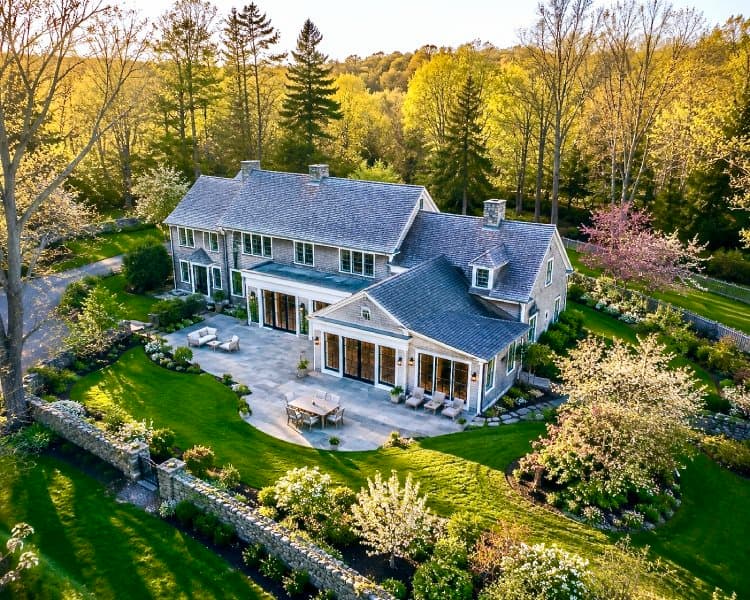
No phrase in contemporary residential design is more frequently invoked, or more variably executed, than “indoor-outdoor flow.” At its most meaningful, it describes a specific architectural condition: a ground-floor space that reads as continuous with the landscape beyond it, where the boundary between inside and outside is negotiated by glass and threshold rather than wall. At its most perfunctory, it describes a sliding door in an otherwise conventional room.
The difference lies in the design of the relationship, not merely the provision of an opening. A family room addition that terminates in a set of French doors onto a properly scaled terrace, with ceiling heights that carry through the glass, with flooring materials that transition deliberately, with a roof overhang that provides shade and shelter without blocking light, creates a qualitatively different experience than one that simply removes a wall and replaces it with glazing.
In the Connecticut landscape, the indoor-outdoor connection has a seasonal dimension that defines its design. The terrace must function in early spring and late October, not merely in July. The roof overhang must manage the sun angle of a mid-afternoon September day. The transition detail must handle rain, snowmelt, and the expansion and contraction of materials across the New England temperature range. These are engineering concerns that shape aesthetic ones, and the builders who understand them are the ones whose additions continue to perform beautifully, a decade after completion.
INITIAL CONSULTATION
A ground-floor addition begins not with measurements but with an honest conversation about how you live, where the friction is, what the aspiration looks like, and what constraints the site and local regulations actually impose. Most clients arrive with a sense that something isn’t working; our first job is to help clarify exactly what, and what it would take to correct it.
SITE ASSESSMENT & DESIGN ALIGNMENT
We walk the property with you, assessing the condition of the existing structure, the site’s constraints, and the natural opportunities the land offers. If you are working with an architect, we engage directly with their plans. If not, we help shape the design direction in collaboration, ensuring that what gets drawn can actually be built, on your site, within your budget.
PERMITTING & REGULATORY COORDINATION
We manage the relationship with local building departments, zoning boards, and, where applicable, inland wetlands commissions and historic district committees. This is not paperwork; it is the part of the process that determines whether a project moves forward without interruption or gets caught in cycles of revision. We know these processes, and we navigate them on your behalf.
CONSTRUCTION
Ground-floor additions proceed in a defined sequence: site preparation and excavation, foundation work, framing, weatherproofing, mechanical rough-ins, and finish work. You are in communication throughout, not through status reports, but through direct access to the person responsible for the project. Most ground-floor additions in our market require between four and eight months from permit approval to final walkthrough, depending on scope and complexity.
FINAL REVIEW & LANDSCAPE RESTORATION
FAQs
Questions We Hear Most
-
We feel squeezed in our kitchen and family room — but is an addition actually the right answer?
Often, yes, but not always immediately. The first question worth asking is whether the existing floor plan can be reorganized without additions by removing walls, improving sightlines, or reconfiguring the relationship between rooms. In many homes built in the 1970s through ‘90s, the constraint is not square footage but compartmentalization. When that reorganization is insufficient, when the rooms themselves are genuinely undersized for how a family uses them, or when the connection to the yard and landscape is simply not there to be unlocked, an addition is the right answer. The trigger is usually a pattern: entertaining feels strained, morning routines produce bottlenecks, and the kitchen cannot hold the number of people who want to be in it. These are design problems with architectural solutions.
-
How will the addition connect to the existing house — and will you be able to match the exterior?
The connection between old and new is the most technically and aesthetically demanding aspect of a ground-floor addition. Structurally, the addition ties into the existing foundation and framing with engineered connections sized to the specific loads involved. Architecturally, our focus is on what we call “earned continuity,” the addition carries forward the original home’s material vocabulary, scale, and proportional logic, but it does not pretend to be old. Where the original carries cedar shingles, so does the addition, in matched profiles. Where the roofline follows a particular pitch, the new addition’s roof engages it with intention. The result, when the work is done well, is a home that reads as a coherent whole from the exterior. From the street, the addition should look as though it was always part of the plan.
-
What does excavation and foundation work actually mean for my yard?
It means a period of genuine disruption, which we say plainly, because homeowners who are prepared for it manage it far better than those who are not. The construction of new footings and foundation walls requires excavation along the addition’s perimeter, typically to frost depth. Equipment will need access to the work area; plantings and lawn in that corridor will be affected. The duration of active excavation and foundation work is typically two to four weeks for a standard residential addition. Once the foundation is complete and the structure is enclosed, the yard settles into a construction-zone condition rather than an active-disruption one. Landscape restoration, grading, seeding, and replanting are planned and executed as the final phase of the project, not as an afterthought. We account for it explicitly in the project scope.
-
We’re in Litchfield County — can we build where we want on the lot?
Litchfield County’s generous lot sizes are a genuine asset for ground-floor additions, but the site constraints that matter most are not visible from the house: the location of your septic system and leach field, the position of your drilled well, and the delineated boundaries of any wetland areas on the property. Setback requirements from septic systems and leach fields are established by the Connecticut Public Health Code and are non-negotiable. Wetland buffers are established by the Inland Wetlands Commission and require a permit when construction approaches within a specified distance. These constraints should be identified before design begins — not after — which is why our site assessment process maps them explicitly. In most Litchfield County situations, they shape the addition’s placement without preventing it.
-
We’re in Fairfield County — how do lot coverage limits and setbacks affect what we can do?
Every town in Fairfield County caps the percentage of a lot that can be covered by structure — typically between 15 and 25 percent for residential properties in the towns we serve, though the specific limits vary by municipality and zone. Before any design work is committed, we establish how much of that coverage allowance is already consumed by your existing house, garage, and any accessory structures, and how much remains available for an addition. Setback requirements — the minimum distances from property lines within which you cannot build — are equally important. In most cases, rear and side yard setbacks are sufficient to allow a meaningful addition. Where they are not, a variance application to the local zoning board of appeals is the procedural path forward. We have navigated this process in Ridgefield, Wilton, New Canaan, Westport, and surrounding towns, and we can provide a realistic assessment of what is feasible on your specific parcel before you invest in design.
-
We have an antique home — can you match old materials?
Matching historic materials is one of the most rewarding and demanding aspects of our work. In Litchfield County, particularly, where the housing stock includes genuine eighteenth- and nineteenth-century structures, the challenge of carrying forward hand-split shingles, wide-board flooring, hand-planed trim profiles, and period masonry requires sourcing relationships, skilled tradespeople, and a builder willing to take the time to get the details right. We have done this work, and we approach it with the same seriousness that the original builders brought to theirs. In some cases, we work with historic preservation consultants to ensure that the approach is consistent with the original structure’s documented history. In all cases, the standard is that the new work should honor the old — not imitate it superficially, but understand it well enough to continue it honestly.
Ready to Expand What Your Home Can Do?
We take on a limited number of projects each year. The conversation costs nothing, and it begins with a single phone call.