
The Case for Building Out: Ground-Floor Additions That Work
When the rooms you love most can no longer hold the life you’re living, the answer is rarely to move — it is to build with intention.
There is a particular domestic frustration that is nearly universal among families who settled into Connecticut’s older housing stock during the 1980s and ‘90s: the rooms were designed for a different era’s idea of privacy. Kitchens were compartments. Family rooms were afterthoughts tucked behind formal dining rooms that no one actually used. The house, in other words, was built for an earlier generation’s rituals — and it shows every time you host a dinner, supervise homework, or simply try to move through a Saturday morning without navigating a series of narrow doorways.
The impulse to move is understandable. The desire to stay and to finally build what you actually need is wiser. Ground-floor additions, lateral expansions of kitchens, family rooms, and living spaces, represent one of the most considered investments a homeowner can make. They do not merely add square footage; done correctly, they rewrite the logic of a home.
When the Floor Plan No Longer Fits the Family
The trigger is almost always the same: a kitchen that functions as an island rather than a gathering place, a family room sealed off from the yard, a growing family that has quietly outgrown the geometry of 1980s residential design. What homeowners want is not simply more space; it is a true great room. A single, generous, intelligently proportioned space where cooking, conversation, and daily life can unfold simultaneously and without obstruction.
The great room concept, broadly popularized in American residential architecture during the late twentieth century, has become the organizing ideal for modern family living precisely because it reflects how people actually inhabit their homes. It dissolves the rigid formality of compartmentalized floor plans, replacing it with fluid, light-filled space. When families describe wanting “better indoor-outdoor flow,” they are describing this same ideal — a home that does not resist its occupants but moves with them.
A ground-floor addition is often the most direct path to that result. Rather than the structural complexity and displacement of a second-story addition, a lateral expansion works with gravity, with the existing foundation’s logic, and with the natural relationship between interior space and exterior landscape.
“The goal is never to add a room. It is to change what the home is capable of.”
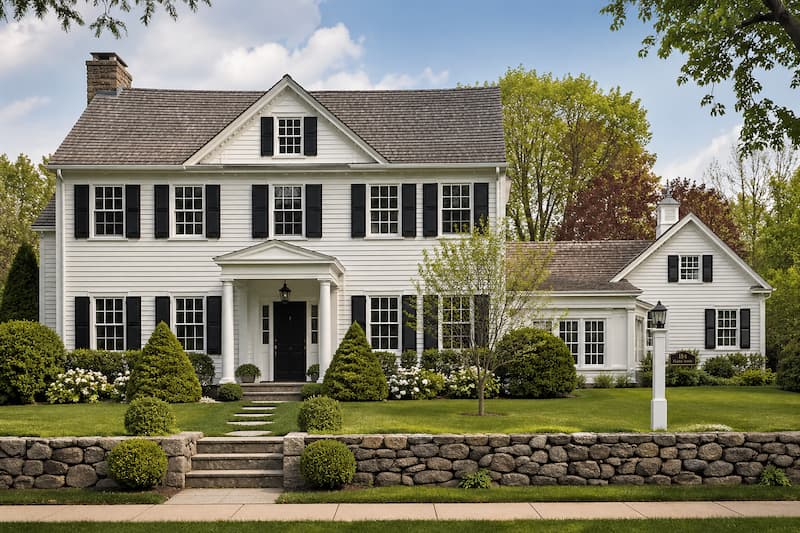
Among the first and most legitimate concerns a homeowner raises is the question of architectural coherence: will the addition feel grafted on, or will it feel original? This is not a superficial vanity. The visual and structural continuity between old and new construction is a genuine test of a builder’s skill, and it has real consequences for how the home reads from the street, how it photographs, and ultimately how it is valued.
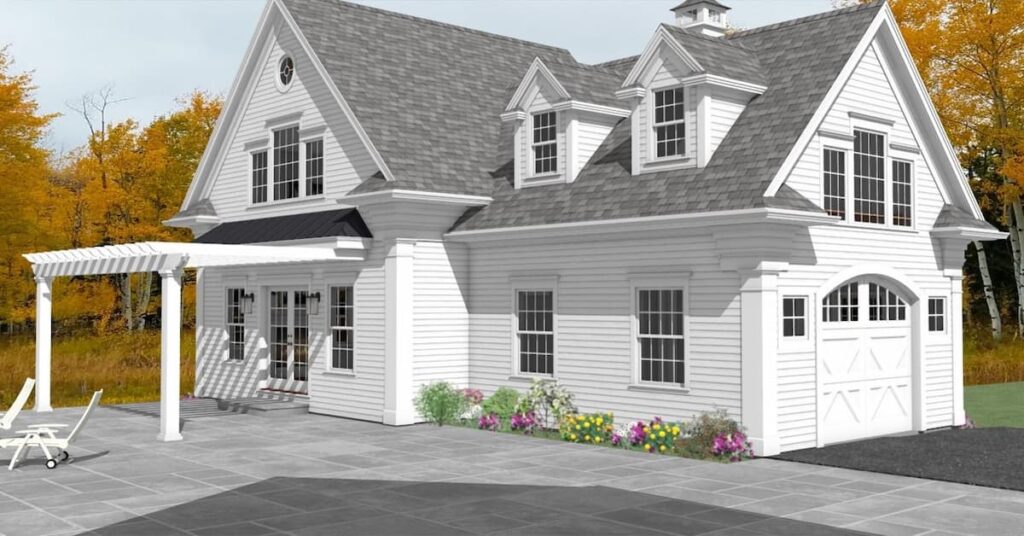
The principle is proportion, not imitation. A ground-floor addition need not copy the original home’s details slavishly; it must, however, respect its scale, its roofline logic, and its material vocabulary. Where the original house carries clapboard siding in a particular width and profile, the addition should match, or consciously, elegantly, depart. Where windows are divided-light double-hung, the addition’s glazing should carry forward that rhythm, even in a more contemporary form. The transition zone, the point where the old wall plane meets the new, deserves particular attention: a skilled builder handles this junction not as a seam to hide but as an opportunity to create a detail that rewards a second look.
Interior transitions are equally important. The threshold between the existing structure and the new addition should feel like a natural passage, not a corridor between two different houses. Ceiling heights, flooring materials, and the profile of base moldings, these elements carry meaning, and their continuity or deliberate evolution communicates whether the project was built with craft or merely constructed.


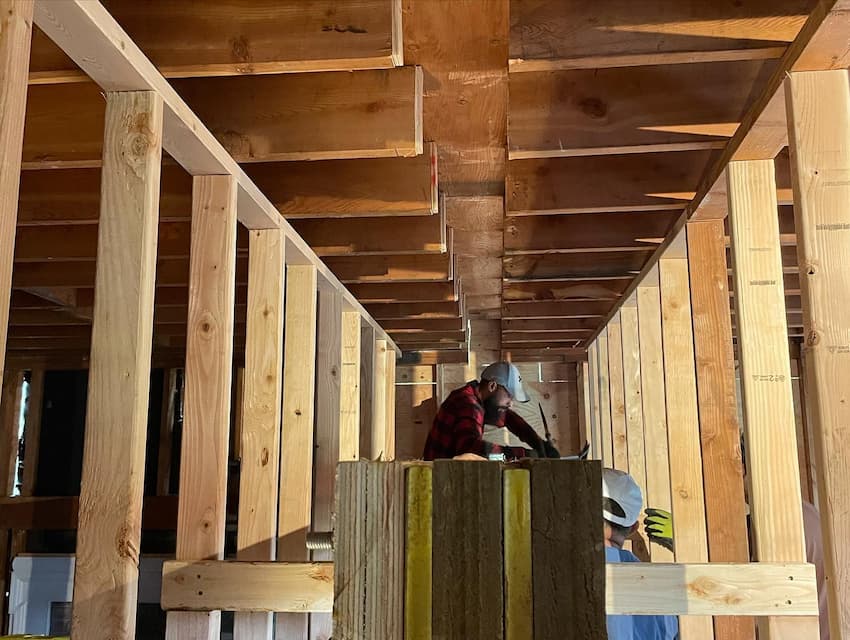
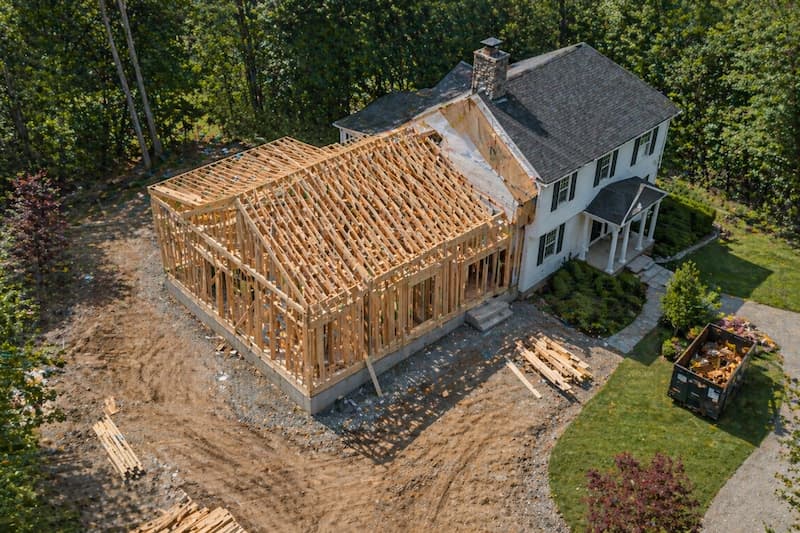
Ground-floor additions require honest preparation for the realities of foundation work. Unlike a room added above an existing footprint, a lateral expansion involves new excavation, new footings, and new foundation walls, a process that will temporarily alter the character of your property. Homeowners should expect a period of disruption: equipment access corridors, disturbed lawn and plantings, and the visible evidence of excavation along the addition’s perimeter.
The scope of this work depends considerably on the addition’s size and the existing site conditions. A modest kitchen expansion of three to four hundred square feet may require relatively shallow footings and minimal earth disturbance. A larger family room addition incorporating a new terrace connection might demand more extensive grading. In either case, a responsible builder completes a thorough pre-construction assessment of existing utilities, water, sewer, gas, and electrical, to ensure that nothing is compromised during excavation.
The yard, when the work is complete, will require some degree of landscape restoration. This is not an afterthought; it is an integral part of the project’s success. The relationship between a ground-floor addition and the landscape it opens onto is precisely what makes the investment worthwhile. A new terrace, a rebuilt garden bed, and a carefully graded lawn transition complete the project and fulfill the promise of true indoor-outdoor living.
Geography and local regulation are not obstacles to good design; they are the conditions within which good design is defined. Connecticut’s residential landscape presents distinct constraints depending on where a property sits.
The Spatial Advantage, and Its Hidden Limits
Litchfield County’s larger lots, particularly in Kent, Washington, and the Litchfield Hills, offer genuine spatial latitude for ground-floor expansion. In many cases, there is simply more room to build outward. But the county’s rural character introduces a different set of constraints that can be equally consequential: the locations of septic systems, leach fields, and drilled wells, as well as the delineated boundaries of wetland areas, all govern where an addition’s footprint can and cannot go. Antique-home owners in these towns face the additional challenge of sourcing period-appropriate materials, hand-split shingles, wide-board flooring, and mortise-and-tenon framing details that meet both historical standards and contemporary performance expectations. This is work that requires a builder who understands authenticity as a discipline rather than a decorative gesture.
Setbacks, Coverage, and the Art of the Possible
In Ridgefield, Wilton, New Canaan, and Westport, the primary regulatory framework governing ground-floor additions is the interplay between lot coverage maximums and required setbacks. Every municipality sets a ceiling on the percentage of a lot that may be covered by a structure, and most require that additions maintain prescribed distances from the side and rear property lines. In towns where original structures already occupy a meaningful portion of the allowable coverage, a ground-floor addition requires careful calculation, and sometimes a variance application, before the first shovel breaks ground. Wetlands and steep-slope regulations in towns bordering the Pound Ridge, Bedford, and Litchfield Hills terrain add further design discipline, occasionally redirecting an addition’s footprint or requiring special engineering attention to drainage and erosion.
Planning, Permitting, and Why It Pays to Know the Territory
Every ground-floor addition in Connecticut requires a building permit, and most trigger a zoning review. Projects near wetlands require coordination with local inland wetlands commissions. In towns with designated historic districts, such as several of Rowe’s service communities, additional review may apply to exterior materials and massing. These are not bureaucratic inconveniences; they are the mechanisms by which communities preserve what makes them worth living in. A builder who knows the local approval landscape, has appeared before these boards, and understands their concerns and standards, moves projects forward without the delays that follow from discovering these requirements after the design is already committed.
A major addition is disruptive. There will be dust, noise, and a morning when you can't find the coffee maker. Anyone who tells you otherwise is selling something.
What we can control is how the experience feels. Every project starts with a logistics plan: which rooms stay in service, which are sealed off, how the crew enters and exits, how the site gets cleaned at the end of each day. Schedules are commitments, not hopes. When something needs to change, you hear it from us first.
Rowe takes on no more than two or three projects at a time. That's the most important sentence on this page. It means your project is one of three, not one of forty. It means the principal of the firm knows the condition of your foundation by name.
"Connor and his crew were amazing in transforming our home. He is responsive, helpful, and his crew was neat. In four months, they completely changed our house." — Rowe client
The word neat is the one to notice.
- 01. The first conversation – A phone or video call. No commitment.
- 02. The site visit – . We walk the house, look at the structure, ask the questions that have to be asked before a pencil hits paper.
- 03. The estimate – Real numbers, itemized by scope, materials, and labor, not a range wide enough to drive a truck through. Costs depend on the project: a bump-out is a different conversation from a full second story, and Fairfield County permitting and finish expectations tend to run higher than Litchfield's.
- 04. The team meeting – You meet, on site, the people who will be in your home. We think you should know them by name before day one.
- 05. Contract and schedule – Signed when you're ready. The schedule is the document we hold ourselves to.
When It's Done
The best day on any project is the day the addition no longer looks new. The crew is gone. The paint has cured. You stand in the room, and what's striking isn't the newness, it's the rightness.
The kids claim the new space within an hour. Your in-laws rearrange the furniture by Wednesday. You make coffee with room to stand at the counter, and you wonder why you waited.
Eventually, a neighbor stops on the sidewalk and asks who did the work.

Why Families Choose Rowe
- Local – Founded by Connor Rowe in 2019. We work almost exclusively in Fairfield and Litchfield Counties.
- Boutique – A+ from the BBB. Long-standing partnerships with the region's best artisans, architects, and designers.
- Transparent – Communication that's regular and plainspoken.
- Design-forward – Most homeowners pick finishes from a screen. Rowe clients make those decisions in person, at a professional showroom in Norwalk.
- Direct – As one client put it: "Connor has always been a straight shooter with us, and he is responsive when problems arise. In my book, these are the most important qualities in a builder."
Service Area
Fairfield County: Ridgefield · Redding · Wilton · New Canaan · Darien · Westport · Fairfield · Weston · Bethel · Newtown · Danbury · Brookfield · Easton · Trumbull · Greenwich · Stamford · Norwalk
Litchfield County: Washington · Kent · Roxbury · Bridgewater · New Milford · Woodbury · Southbury · Litchfield · Bethlehem · Morris · Warren · Sharon · Cornwall · Salisbury
FAQs
Frequently Asked Questions
-
Do I need a permit?
Yes. Requirements vary by town, and historic districts add a layer. We handle it.
-
How long does an addition take?
A bump-out, two to three months. A full second story, six to nine or more. We give you a real schedule before we start.
-
Can a second story be added to my house?
Usually, yes, subject to a structural assessment of the foundation and load paths. When it works, it's one of the most consequential improvements you can make.
-
Do you work on historic and antique homes?
It's some of our favorite work.
-
Will the addition match the rest of the house?
Matching isn't paint color. It's rooflines, siding profiles, window proportions, and trim. We obsess over the seam.
-
Can we live in the house during construction?
Usually, yes, with planning. We'll be honest about which days will be harder.
-
Will an addition increase property value?
In these counties, a well-executed addition almost always does. Primary suites, in-law suites, and expanded kitchens perform best.
-
HOA or historic-district approvals?
We handle the paperwork and the boards.
Let's Talk
You've already done the harder work. You chose the right town. You built a life worth staying in.
The next step is a conversation, unhurried and useful. We'll listen, tell you what's possible, and help you decide whether an addition is the right move.
We usually think it is. We'll tell you either way.
Rowe Construction Ridgefield, CT · Serving Fairfield and Litchfield Counties (203) 470-2903 · roweconstructionct.com
"We're guided by our passion for building relationships with our customers and our community that are as strong as the structures we build for them." Connor Rowe, Founder