
Home Additions In Fairfield County CT
You Don't Have to Move. You Have to Reimagine.
There comes a Sunday afternoon, in a kitchen you've been standing in for years, when you realize you are not going to move. The town is right. The school is right.
Maybe the family has grown. Maybe a parent is moving in. Maybe the home office that started as a closet during the pandemic has worn out its welcome. The kitchen is charming, but it was built for a smaller life than the one being lived in it.
This is the moment most of our clients call.
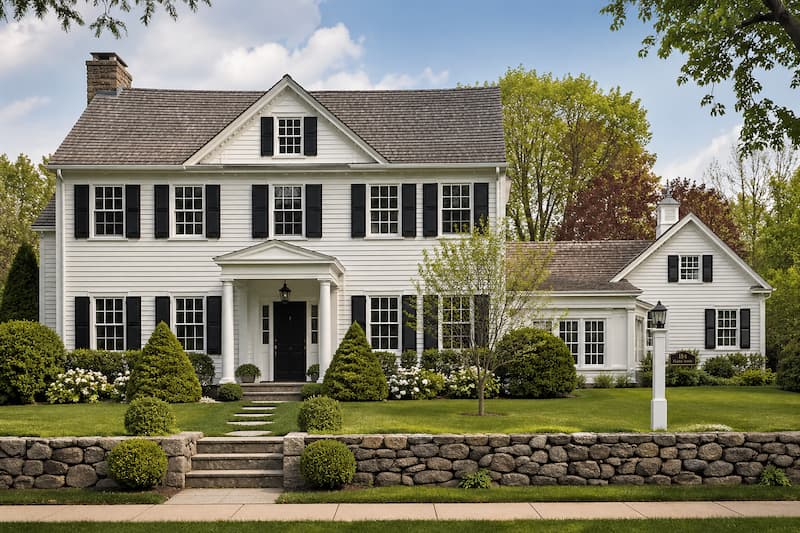
The Case for Adding On
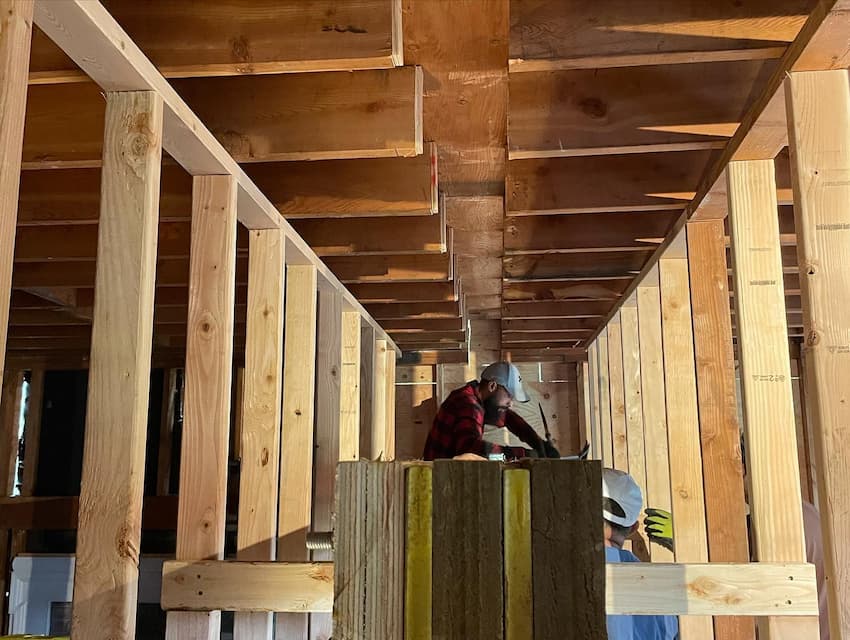
Moving is more expensive than it looks. There's the agent's commission, the transfer tax, the inspections, the moving company, and the repairs the new house declines to mention until the second week. There's also the cost of leaving the things that brought you here, the lot, the school district, the garden bed it took six years to get right.
A well-designed addition is the alternative. The garden stays. The address stays. The house catches up to the life inside it.
The reasons we hear, in towns from Ridgefield to Salisbury, sound a lot alike:
- The family is growing, and the house isn't.
- We need to finish the space above the garage.
- My parents are moving in.
- I'm working from home for good. I need a real office.
- We want to age in place.
Connecticut's housing stock is remarkably varied. On a single mile of country road, you might pass an 18th-century saltbox, a Queen Anne, a midcentury modernist, and a 1980s center-hall Colonial. Each was built with conviction. Each asks to be understood on its own terms.
Fairfield County was settled in 1639, and you can still see it in Ridgefield's historic district and the Federal-period houses of Weston. New Canaan holds one of the country's great concentrations of midcentury work, the Harvard Five (Johnson, Breuer, Johansen, Noyes, Chermayeff) shaped how the town has thought about glass and landscape ever since. Litchfield County is an older country in a different sense: the white clapboards of Litchfield Green, the antiques district in Woodbury, the side streets of Kent and Sharon, with their wide-plank floors and working fireplaces from the 1780–1850 stretch.
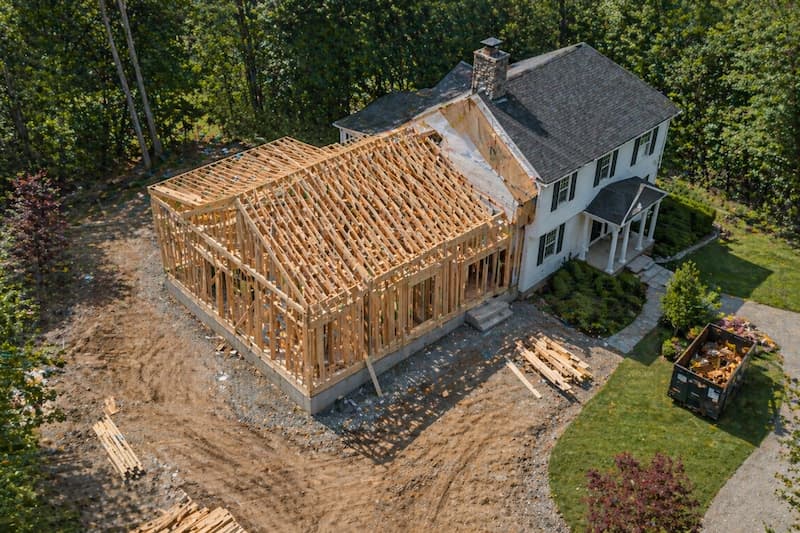


- Second-Story Additions – A ranch becomes a house, without giving up a foot of yard.
- Rear and Side Extensions – When the answer is out, not up. A good rear addition can reorient the whole ground floor toward the landscape.
- Attic Conversions – Properly insulated and lit, an attic is a primary suite, a study, or a library, often with the best views in the house.
- Bump-Outs – Four to six feet of new floor space, often the most elegant solution. A galley kitchen becomes one you actually want to cook in.
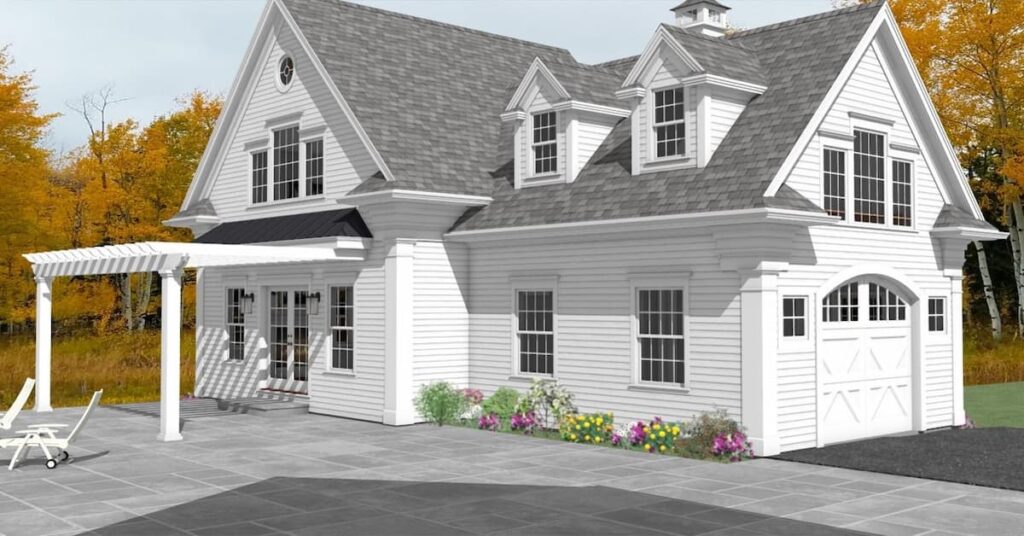
- Garages and Garage Apartments – The space above the garage is one of the most underused assets in the New England house. Guest suite, in-law residence, rental, studio.
- In-Law and Multigenerational Suites – Done well, these aren't compromises; they're privacy and proximity in the right measure.
- Home Offices – A real one, with a door, daylight, and acoustic separation. The closet-with-a-ring-light era is over.
We also handle whole-house renovations, kitchen and great-room expansions, primary-suite additions, and historic-home work. We collaborate with local architects, engineers, and designers. If you have someone you trust, we work with them. If you don't, we can introduce you.
This is the hardest work we do, and the work we're proudest of.
A house built in 1790 has proportions and materials that took two centuries to settle. An addition that ignores them looks wrong the day the scaffolding comes down. The discipline is editorial: add what the original is asking for, in the original's voice. Match the profiles, not approximate them. Let the rooflines flow into the existing geometry. Choose materials that will weather correctly in twenty-five years, not just look right on opening day.
The goal is that a stranger can't tell where the old house ends and the new one begins.
For newer houses, the principles are the same. The vocabulary just changes.
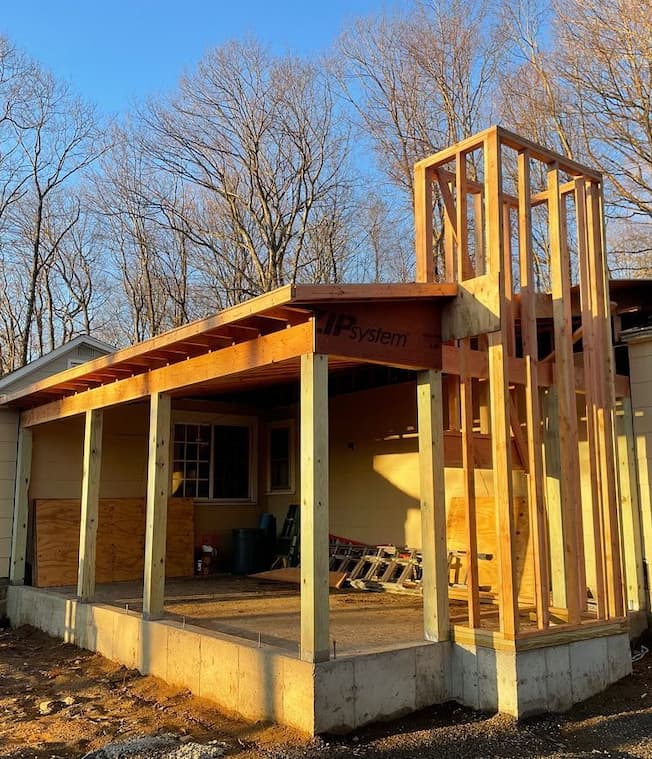
- 01. The first conversation – A phone or video call. No commitment.
- 02. The site visit – . We walk the house, look at the structure, ask the questions that have to be asked before a pencil hits paper.
- 03. The estimate – Real numbers, itemized by scope, materials, and labor, not a range wide enough to drive a truck through. Costs depend on the project: a bump-out is a different conversation from a full second story, and Fairfield County permitting and finish expectations tend to run higher than Litchfield's.
- 04. The team meeting – You meet, on site, the people who will be in your home. We think you should know them by name before day one.
- 05. Contract and schedule – Signed when you're ready. The schedule is the document we hold ourselves to.
When It's Done
The best day on any project is the day the addition stops looking new. The crew is gone. The paint has cured. You stand in the room and what's striking isn't the newness, it's the rightness.
The kids claim the new space within the hour. Your in-laws rearrange the furniture by Wednesday. You make coffee with room to stand at the counter, and you wonder why you waited.
Eventually, a neighbor stops on the sidewalk and asks who did the work.

Why Families Choose Rowe
- Local – Founded by Connor Rowe in 2019. We work almost exclusively in Fairfield and Litchfield Counties.
- Boutique – A+ from the BBB. Long-standing partnerships with the region's best artisans, architects, and designers.
- Transparent – Communication that's regular and plainspoken.
- Design-forward – Most homeowners pick finishes from a screen. Rowe clients make those decisions in person, at a professional showroom in Norwalk.
- Direct – As one client put it: "Connor has always been a straight shooter with us, and he is responsive when problems arise. In my book, these are the most important qualities in a builder."
Service Area
Fairfield County: Ridgefield · Redding · Wilton · New Canaan · Darien · Westport · Fairfield · Weston · Bethel · Newtown · Danbury · Brookfield · Easton · Trumbull · Greenwich · Stamford · Norwalk
Litchfield County: Washington · Kent · Roxbury · Bridgewater · New Milford · Woodbury · Southbury · Litchfield · Bethlehem · Morris · Warren · Sharon · Cornwall · Salisbury
FAQs
Frequently Asked Questions
-
Do I need a permit?
Yes. Requirements vary by town, and historic districts add a layer. We handle it.
-
How long does an addition take?
A bump-out, two to three months. A full second story, six to nine or more. We give you a real schedule before we start.
-
Can a second story be added to my house?
Usually, yes, subject to a structural assessment of the foundation and load paths. When it works, it's one of the most consequential improvements you can make.
-
Do you work on historic and antique homes?
It's some of our favorite work.
-
Will the addition match the rest of the house?Matching isn't paint color. It's rooflines, siding profiles, window proportions, and trim. We obsess over the seam.
-
Can we live in the house during construction?Usually, yes, with planning. We'll be honest about which days will be harder.
-
Will an addition increase property value?In these counties, a well-executed addition almost always does. Primary suites, in-law suites, and expanded kitchens perform best.
-
HOA or historic-district approvals?
In these counties, a well-executed addition almost always does. Primary suites, in-law suites, and expanded kitchens perform best.
Let's Talk
You've already done the harder work. You chose the right town. You built a life worth staying in.
The next step is a conversation, unhurried and useful. We'll listen, tell you what's possible, and help you decide whether an addition is the right move.
We usually think it is. We'll tell you either way.